
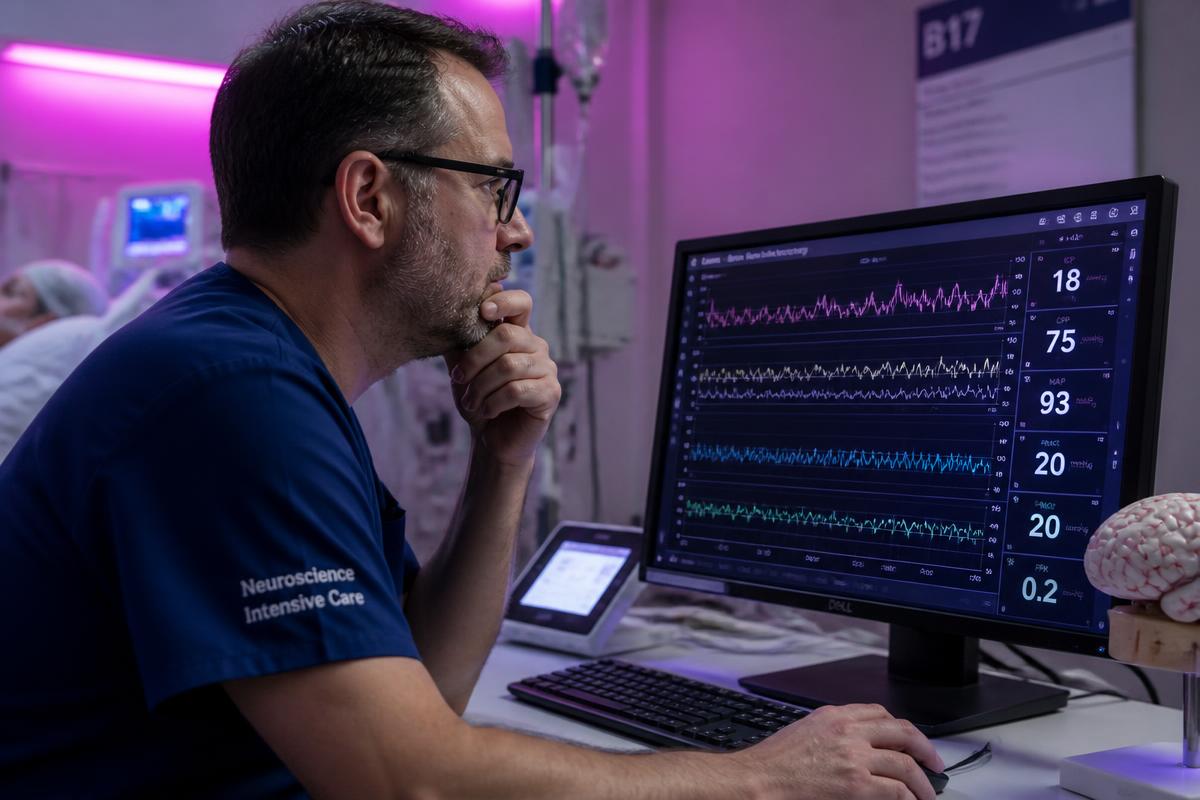
Modern medicine is built on vital signs. Heart rate, blood pressure, respiratory rate, temperature and oxygen saturation are measured in ambulances, clinics, wards and living rooms. Intracranial pressure (ICP) is just as fundamental to brain health, yet it is measured almost exclusively in the intensive care unit, using an invasive probe, for a matter of days.
The consequence is that clinicians manage chronic brain conditions with almost no objective pressure data. A patient with a shunt, a treated tumor or idiopathic intracranial hypertension is assessed largely on symptoms and imaging, both of which lag behind the physiology. A headache may mean nothing, or it may mean pressure has been climbing for weeks.
What continuous measurement would change
- Trends rather than snapshots — a rising baseline is more informative than a single reading
- Earlier intervention, before deterioration becomes an emergency
- Objective evidence of whether a treatment is actually working
- Fewer unnecessary scans and emergency visits for symptoms that turn out to be benign
Making ICP a routine vital sign requires a sensor that is safe to leave in place, needs no battery or electronics, and can be read without touching the brain again. That is the problem SensoBrain is working on.
← All insights