
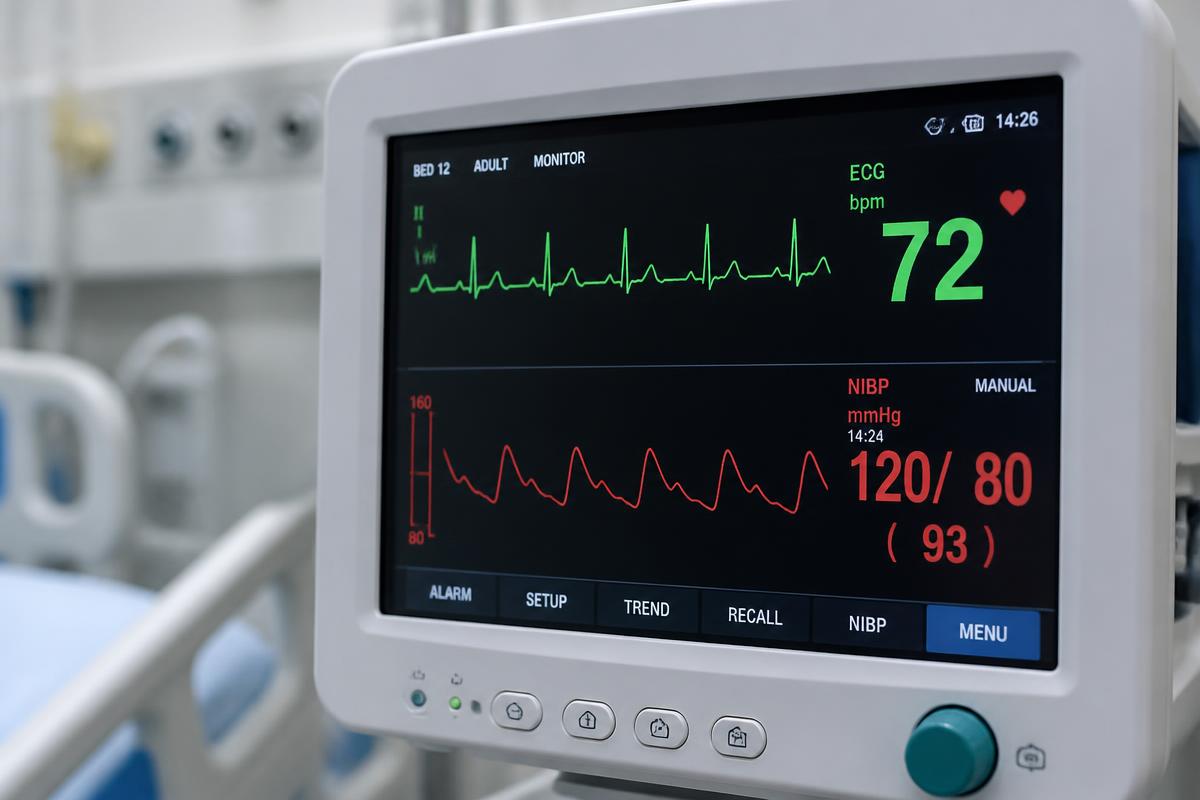
Intracranial pressure is rarely interpreted in isolation. Clinicians look at it alongside mean arterial pressure, oxygen saturation, heart rate and carbon dioxide levels, because the brain's supply of blood depends on the relationship between them.
Cerebral perfusion pressure
The most important derived number is cerebral perfusion pressure — mean arterial pressure minus intracranial pressure. When ICP rises, perfusion falls even if blood pressure is unchanged. A patient can look stable on standard monitoring while the brain is quietly under-perfused.
Signals that move together
- Carbon dioxide: elevated levels dilate cerebral vessels and raise ICP
- Oxygenation: low oxygen drives compensatory blood flow changes that affect pressure
- Heart rate and blood pressure: the Cushing response — rising blood pressure with falling heart rate — is a late warning of dangerously high ICP
- Posture and sleep: pressure varies across the day and often peaks overnight
Because ICP fluctuates with posture, activity and sleep, occasional in-clinic measurement can be misleading. Longitudinal data recorded during ordinary life provides a far more faithful picture of what the brain is experiencing.
← All insights